Showing posts with label catholics. Show all posts

Tuesday, July 14, 2015

Mont Carmel...Sodo...Patron Saint of Haiti

On July 16th hundreds from all around travel to Sodo in Haiti

some on an annual pilgrimage to the church of Mont Carmel, and the waterfall to where the Saint is said to appear.  I remember my first trip to this hill.   I was 9 years old in a foreign country. It was experience like none before.  We traveled hours from Leogane on dirt hills, back roads, and mountains.  We reached there were no known hotels, and we asked among the residents of the town for a space to rent during our stay. No running water, just a plot and an outhouse.  Humbling to say the least. The streets were busy with folk, those who bought cows, pigs, and sheep for sacrifice paraded among the street.

The next day we were dressed in sky blue and white, and went to the church.  Masses of people were all around.  I have been to church before, but have not attended a service like this.  Those who held flowers, others with pictures, of loved ones, and those spoke with great conviction.  The crowd gathered and started a procession around the church, singing and dancing.

Then was the highlight of the trip, we walked up the trail to the heart of Sodo,

again many gathered singing, telling stories, and jokes.  We got on a donkey as much as I tried to stir it in the other direction.  The ass stay near the edge of the cliff.  As we approached we were greeted by a gangan, ready to give fortune, or supplies.  The crowd continued to gather.  The intent was to give it back all the trials, and tribulations to saint.  As the ice cold pounded and washed away your sins.

May God bless Haiti.  It is the only place that I know where nature is heralded and held with reverence.  We all have heard of baptism, where we are said to receive a rebirth, and communion with GOD.  I have yet to see spirituality like this.   One could say that Haiti faces its trails and tribulations, because the people embrace, and hold on to what is sacred.  Believers still have holy days.

Niagara Falls is said to be one of the 7 wonders, and truly a sight to see.  As the boat approached the falls.  It seemed like an apocalypse,  but we were in the safety of a boat that would bring us back to land. It is said that women used to travel to the Niagara to meditate.  

Could it be that we are so disconnected, because of we lack to be in touch with nature?  
So if you can't make it to Sodo this year, maybe visit a waterfall, or light a candle this July 16th. Ayibobo!


Thursday, July 9, 2015

Honor &Respect, the Vodou Code. Nature rules...Supreme

Our Constitution is simply what we are made of.  Anything in its original form when created is at its purest, and powerful.  As it changes it is weakened and diluted.

We are experiencing history in the making.  America is changing and so are its values.  The Constitution is said to be built upon biblical principles.  However, this GOD that was once Trusted is being stripped from American... out of schools, and our beloved dollar bill


When in the Course of human events, it becomes necessary for one people to dissolve the political bands which have connected them with another, and to assume among the powers of the earth, the separate and equal station to which the Laws of Nature and of Nature's God entitle them, a decent respect to the opinions of mankind...

"Laws of Nature" into the Declaration of independence, was referring to an Enlightenment concept deeply rooted in Western philosophy.

We now have the freedom to marry whomever we want.  We have the world at our finger tips but do we seek light!  Does it come with a click of a button, or flip of a switch?  It takes the same effort it took, then personal discovery and  encounter!

The laws of Nature can not be denied.  If Mother Nature is ignored it can take you out!


Monday, May 18, 2015

The ABCs of Spells... Spelling

Thank God for the internet, the wonderful world wide web.  You can google just about anything.  Google however is Artificial intelligence, an algorithm, you can only get out what was put in.   

Many search for spells on the net.  People seek spells for love, work, money, etc.  Yet, you know when you cast your net you can draw up things that want, and others that you do not.  The beauty that we have is natural intelligence.  As beings we have the power to create.

Yes, others can effectively petition on your behalf.  However,  No one can speak to your situation, greater, than you. You are going through your own experience. If it is your desire to become a mambo, hougan, shaman, etc, this is an indispensable skill.

The truth is a lot of people do not know how to spell. Being able to spell is the ability sum up how you feel. (A spell enhances your confidence that will get you a job, an interview, your money back, your to get your personality across.  Your words is your sword, and your vocabulary is vehicle that drive them into existence.

A spell consists of words to command a certain outcome.  Yes, spelling that which we learned in elementary school is important. Words have power! Re- read the sentence...

While in school, I have heard some say I do not see why this is important I am not going to use this in "real" life!?! Spelling seems crazy, illogical, and 'weird', right? But there are patterns, rules & reasons why some words are spelled the way they are - honestly!

One of the main complaints I here that I do not have...
Statistics state that:
2/3 of American students who aren't proficient readers by the grade will end up in jail or on welfare.
61% of low income families don't have books at home... 
1 in 4 American children never learn how to read. 


Interesting numbers, when education in America is, free. It's never too late to improve your spelling, thus your spells. Do something now to improve your spelling. It is useful for your personal altar work, addressing the lwa, and magic. 

Learning all about why we spell the way we do.  Notice spelling patterns, and using spelling strategies will improve your spells--- spelling, writing and confidence.


Monday, December 19, 2011

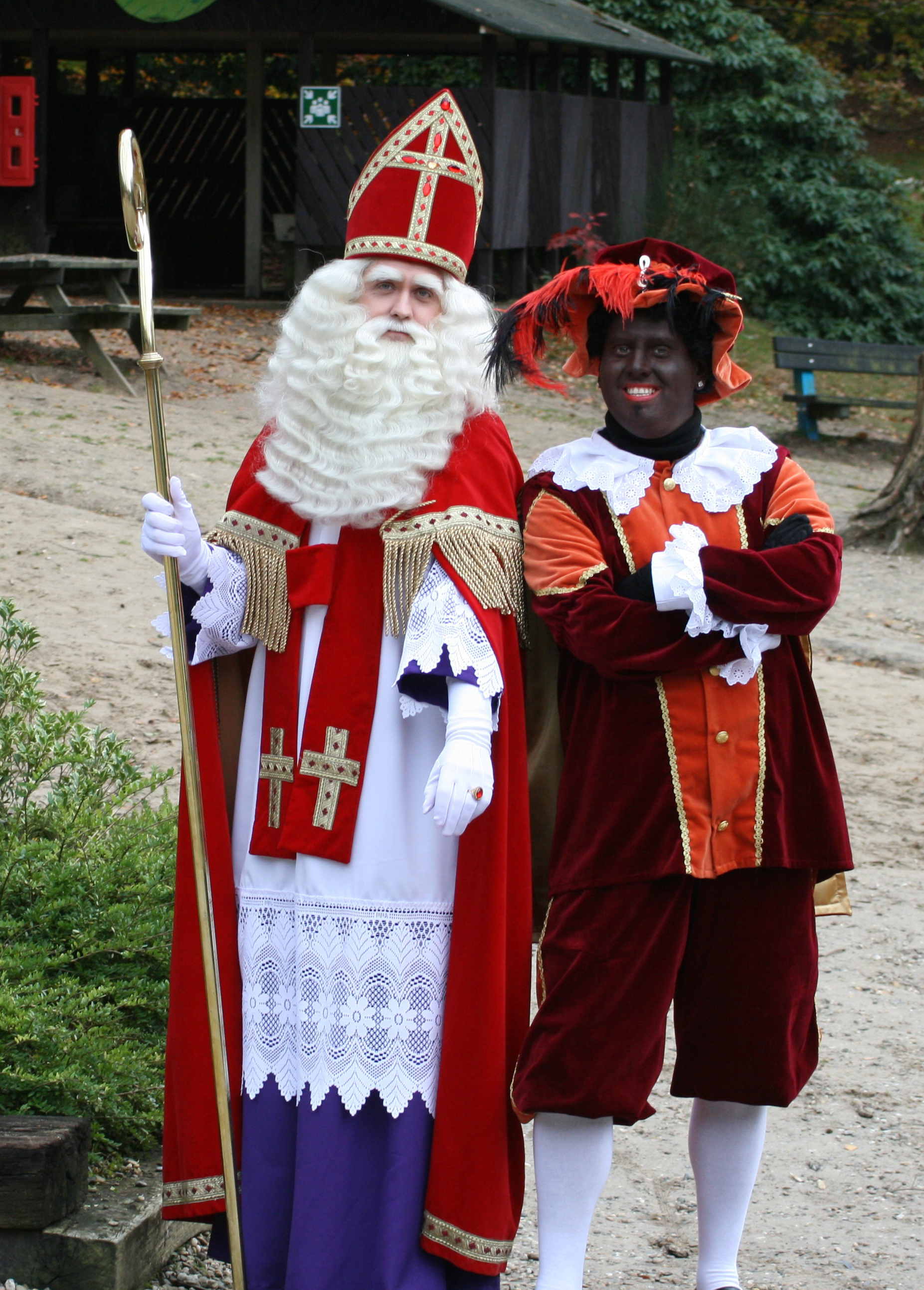
St. Nicholas, the Father or Overseer of Vodou?


Image of St.Nicholas
sorry I'm unable to rotate this pic on this blog


Perhaps this will serve as better imaginery!-)


Historically, we were told that Christopher Columbus landed on Mount Saint Nicholas in Haiti. Just as the Pilgrimages landed on Plymouth Rock in America.  Malcom X said it beautifully Plymouth Rock landed on us.   It is known that things fell apart once the infmaous Christoher Columbus landed anywhere.   Although, he did not discover anything, anyone, or anywhere for that matter.  His contribution, however, was the Colonization of the islands.  So, just who is St. Nicholas and what does he represent.   I have seen this particular image on my mother's altar for quite sometime, but there was always a question mark as to who or what he represented in Haitian Vodou.  Culturally, some people do not understand why things are done it is just accepted as the norm.   Finally, I have put the pieces together.  

Check out this piece written in wikipedia about St. Nicholas, and Sinterklaas

Although he is usually referred to as Sinterklaas, he is also known as De Goedheiligman (The Good Holy Man), Sint Nicolaas] or simply as De Sint.  He is celebrated annually on Saint Nicholas' eve (5 December) or on the morning of 6 December in Belgium and Northern France. Originally, the feast celebrates the name day of Saint Nicholas — patron saint of children, sailors, and the city of Amsterdam, among others. Sint Nicholas being a bishop and this geographical spread make clear that the feast in this form has a Roman-Catholic background.

Sinterklaas carries a staff and has mischievous helpers with black faces!?!


Middle Ages
Originally, the Sinterklaas feast celebrates the name day, 6 December, of the Saint Nicholas (280–342), patron saint of children. Saint Nicholas was a Greek bishop of Myra in present-day Turkey. In 1087, his relics were furtively translated to Bari, in southeastern Italy; for this reason, he is also known as Nikolaos of Bari. Bari later formed part of the Spanish Kingdom of Naples, because it was previously conquered in 1442 by Alfonso V of Aragon. The city thus became part of the Kingdom of Aragon and later to Spain, until the eighteenth century. Due to the fact that the remains of St. Nicholas were in Bari (then a Spanish city), is this tradition that St. Nicholas comes from Spain. His helper is black because at the time Spain was part of the Moor empire. St. Nicholas is well known in Spain as the patron of sailors. That's why St. Nicholas comes to the Netherlands in a steamboat. St. Nicholas fame spread throughout Europe. The Western Catholic Church made his name day a Church holiday. In the north of France, he became the patron saint of school children, then mostly in church schools. The folk feast arose during the Middle Ages. In early traditions, students elected one of them as "bishop" on St. Nicholas Day, who would rule until December 28 (Innocents Day). They sometimes acted out events from the bishop's life. As the festival moved to city streets, it became more lively.[2]
Sinterklaas is assisted by many mischievous helpers with black faces and colourful Moorish dresses. These helpers are called 'Zwarte Pieten' (Black Petes). During the Middle-ages Zwarte Piet was a name for evil. Although the character of Black Pete later came to acquire racial connotations, his origins were in the evil figure. Good and bad play an important role in the feast: good is rewarded, bad and evil is punished. Hence the duplication of the one Saint in a saint and a (frolicking) devil.

The feast was both an occasion to help the poor, by putting money in their shoes (which evolved into putting presents in children's shoes) and a wild feast, similar to Carnival, that often led to costumes, a "topsy-turvy" overturning of daily roles, and mass public drunkenness.

[edit] 16th and 17th Century

After the rebellion of the 17 Dutch provinces against the Spanish Empire, Calvinist regents and ministers prohibited celebration of the Saint. The Republic of the United Provinces became an officially Protestant country following the Reformation, and its governments abolished public celebrations. The South, however, remained Catholic. People there and students in Amsterdam, also Catholic, protested. The governments were forced to allow celebration within the family.

19th Century

 Perhaps building on the fact that Sint Nicholas historically is the patron saint of the sailors (many churches dedicated to him have been built near harbors), Schenkman could have been inspired by the Spanish customs and ideas about the saint when he portrayed him arriving via the water in his book. Schenkman introduced the song Zie ginds komt de stoomboot ("Look over yonder, the steamboat is arriving"), which is still popular in the nation.
In Schenkman's version, the medieval figures of the mock devil, which later changed to Oriental or Moorish helpers, was portrayed for the first time as black African and called Zwarte Piet (Black Peter).[2] He is a negro boy who accompanies Sinterklaas and helps him on his rounds (possibly derived from the Dutch colonial experience, or the Moorish occupation of Spain, the main Catholic nation.) Traditionally Sinterklaas only had one helper, whose name varied wildly. "Piet(er)" the name in use now can be traced back to a book from 1891.

According to the more modern Saint Nicholas legend, a Zwarte Piet is a servant who accompanies Saint Nicholas on his holiday travels. In some versions, Saint Nicholas is said to have liberated a young slave named Peter, who decided to serve Nicholas. Zwarte Piet is today commonly depicted as a black person in the colorful pantaloons, feathered cap and ruffles of a Renaissance European page, a tradition that started based on a single illustration in a book published in 1850.
File:Sintenpiet.jpg
Until the second half of the 20th century, Saint Nicholas' helper was not too bright, in line with the old colonial traditions. Once immigration started from the former colonised countries Zwarte Piet became a much more respected assistant of Saint Nicholas, who is often a bit inattentive, but playfull.[8]
According to the more modern Saint Nicholas legend, a Zwarte Piet is a servant who accompanies Saint Nicholas on his holiday travels. In some versions, Saint Nicholas is said to have liberated a young slave named Peter, who decided to serve Nicholas. Zwarte Piet is today commonly depicted as a black person in the colorful pantaloons, feathered cap and ruffles of a Renaissance European page, a tradition that started based on a single illustration in a book published in 1850.
Zwarte Pieten are often portrayed as mischievous but rarely mean-spirited characters. The character is believed to have been derived from pagan traditions of evil spirits. Also told for decades is a story that the Zwarte Pieten are black because of chimney soot and/or in mockery of the darker Spanish occupiers of the Low Countries in centuries past.

During recent years the role of Zwarte Pieten has become part of a recurring debate in the Netherlands. Controversial practices include holiday revellers blackening their faces, wearing afro wigs, gold jewellery and bright red lipstick,[9] and walking the streets throwing candy to passers-by.

Foreign tourists, particularly Americans, often experience culture shock upon encountering the character (to dress in blackface is considered offensive in the United States, the United Kingdom and other countries). Since the last decade of the 20th century there have been several attempts to introduce a new kind of Zwarte Piet to the Dutch population, where the Zwarte Pieten replaced their traditional black make-up with all sorts of colours.[10] In 2006 the NPS (en: Dutch Programme Foundation) as an experiment replaced the black Pieten by rainbow-coloured Pieten, but in 2007 reverted to the traditional all-black Pieten.[11]


WAKe Up~

Wednesday, December 7, 2011

The Holy Immaculate Perpetual Misconception?!!

On December 8th 2011
Millions will flock to the nearest Roman Catholic Church in observance a worldwide acclaimed "Holy" Day of Observation.


In the Haitian Vodou tradition she is linked to one of  the facets of Erzulie.  Erzulie is equated with passion, perfume, luxury, possessions especially MONEY!!!

I had the privilege and pleasure of  making my first visit to Europe this year.  I was truly an eye opening experience.  The history contained is enough to make your spin, but there was some things that stood out then most,  

Does this look familiar?  One has to ask why the cut out?  

or pehaps...


Some more food for thought...

"1n 1847, at the petition of the bishops of the United States, Pope Pius IX named the Blessed Virgin patroness of the United States under the title of the Immaculate Conception."


The United States has long and appropriately been referred to as the “great melting pot” as a place where people from many diverse lands and customs have come to dwell.  The Basilica is a microcosm of this phenomenon, honoring devotions to the Blessed Virgin Mary from around the world, which the generations of our immigrant population have sustained.

On October 7, 1979, Pope John Paul II, the first reigning Pope ever to visit the Basilica, proclaimed in the Great Upper Church:

“This Shrine speaks to us with the voice of all America, with the voice of all the sons and daughters of America, who have come here from the various countries of the Old World.  When they came, they brought with them in their hearts the same love for the Mother of God that was characteristic of their ancestors and of themselves in their native lands.  These people, speaking different languages, coming from different backgrounds of history and traditions in their own countries, came together around the heart of a Mother they all had in common.  While their faith in Christ made all of them aware of being one People of God, this awareness became all the more vivid through the presence of the Mother in the work of Christ and the Church.”


Vatican City State and the Holy See each have their own coat of arms. As the Papacy is not hereditary, its occupants display their personal arms combined with those of their office.
Some Popes came from armigerous (noble) families; others adopted coats of arms during their career in the church. The latter typically allude to their ideal of life, or to specific Pontifical programmes.[14] A well known and widely displayed example in recent times was Pope John Paul II's coat of arms. His selection of a large letter M (for Mary) on his coat of arms was intended to express the message of his strong Marian devotion.[15]
Roman Catholic Dioceses also are assigned a coat of arms. A Basilica, or papal church also gets a coat of arms, which is usually displayed on the building. These may be used in countries which otherwise do not use heraldic devices.